I joined Apodex in late March 2026 as one of three founding engineers of Prax / AgentOS and became the technical owner of ApodexHarness infrastructure. The project develops an execution system for complex, long-running tasks.
Harness architecture
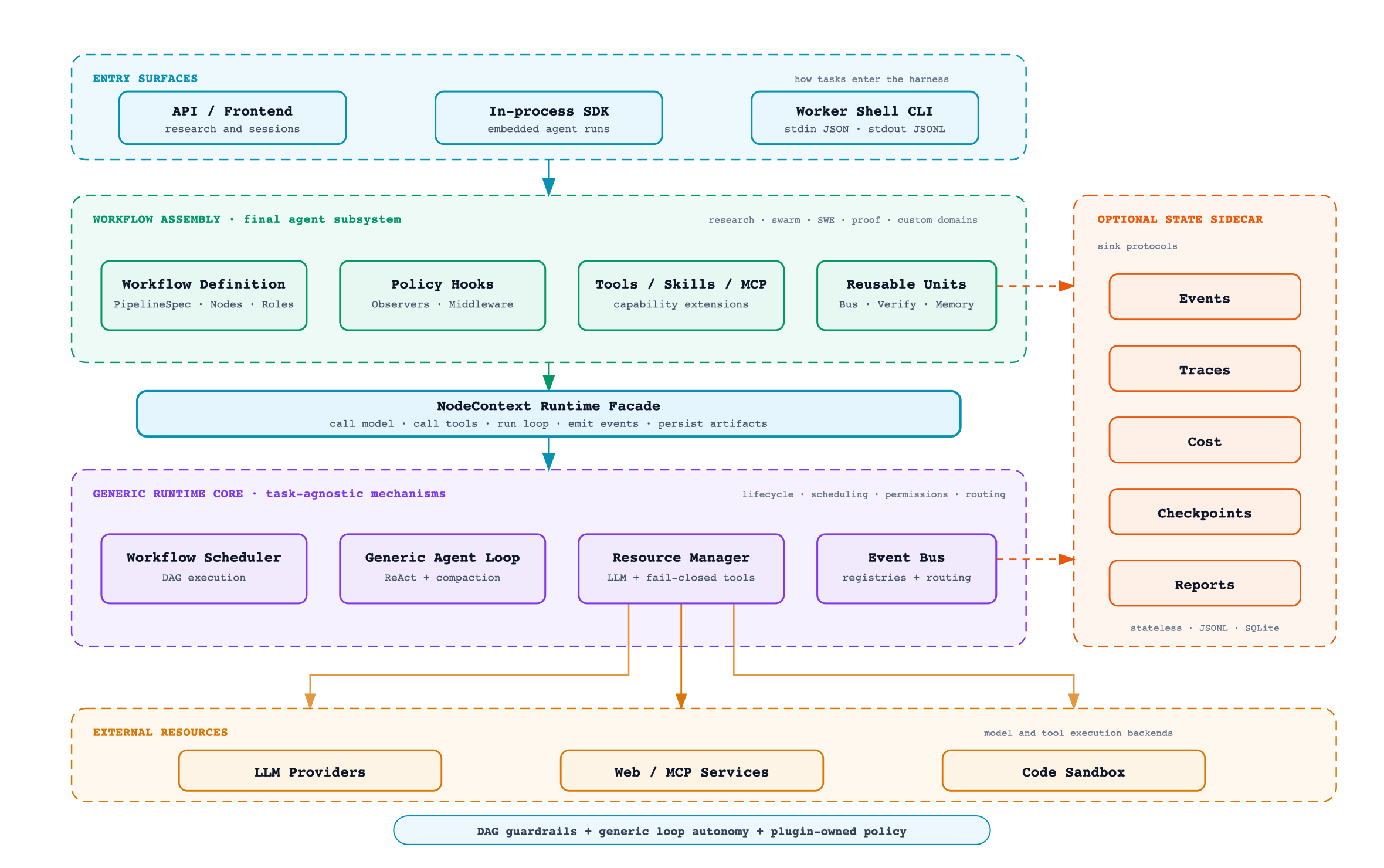
I built heavy_mode, which combines parallel sub-agents, cross-branch synthesis, global verification, and continuation after interruption. I proposed planner-generated, schema-constrained workflow DAGs and replaced a LangGraph dependency with a compact execution engine supporting branches and verification-retry loops.
I also developed token-budgeted context compression, file-based research memory, tool-specific result budgets, and evidence checks for unsupported numbers and citations. Reliability work included durable agent messages, sandbox isolation, tool permissions, and cancellation-safe event streaming.
The harness connects workflows to a unified evaluation interface. I supported the Apodex 1.1 and 1.2 model releases and ran 240 APEX Agents 1.1 tasks end to end to validate the evaluation path.
Apodex 1.1: Agent Team state and artifact delivery
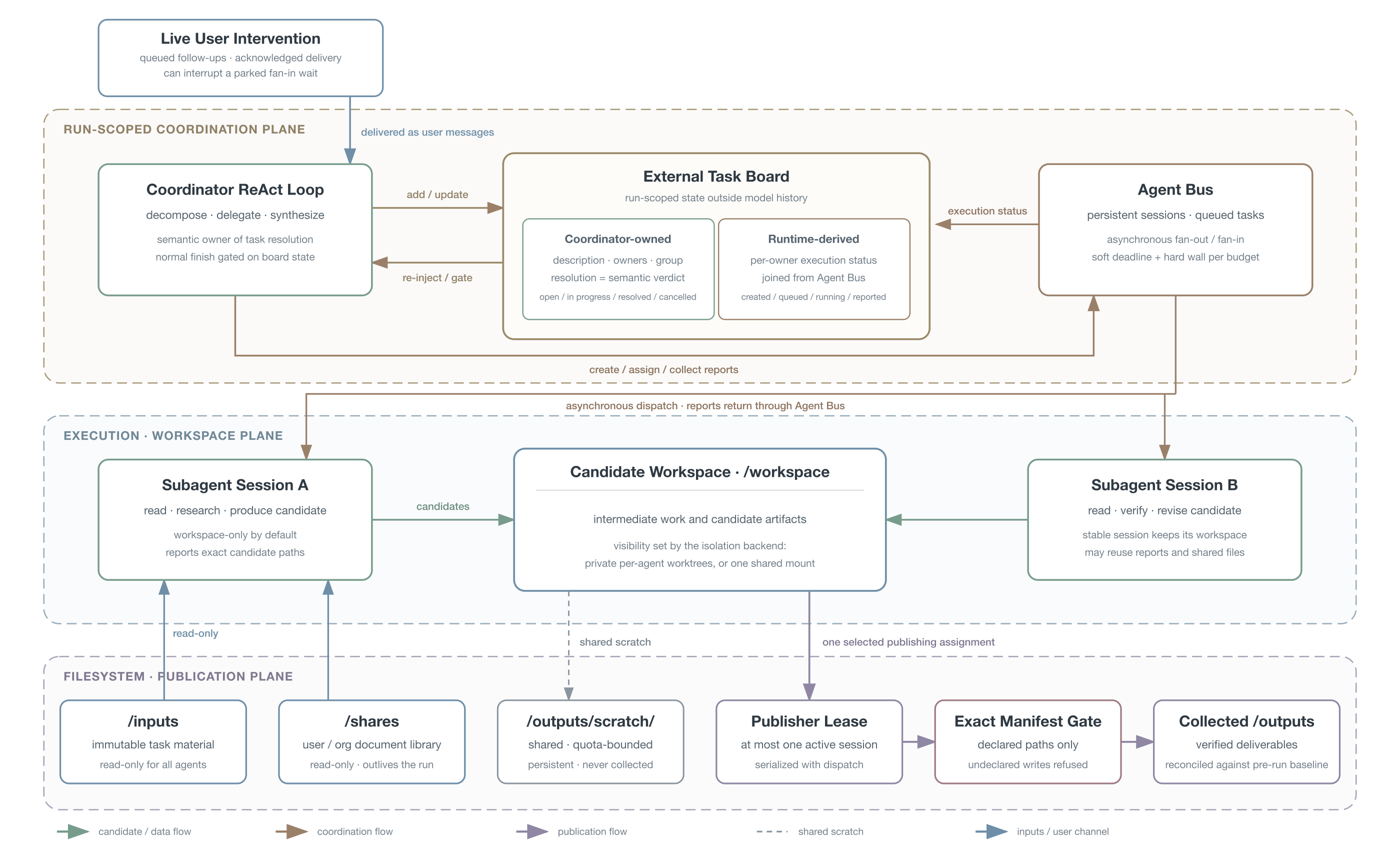
For Apodex 1.1, the harness added a more explicit contract for coordinated agents. The coordinator owns task resolution on an external task board, while the Agent Bus tracks asynchronous subagent execution. Candidate work stays in agent workspaces or shared scratch space; a single publisher lease and an exact manifest gate determine which files become collected outputs. Live user follow-ups can enter the same run without losing the task state.